REDCRAFT
 REDCRAFT is an open-source software tool for
determining a protein's structure using residual dipolar couplings (RDCs). It allows simultaneous
determination of a protein's structure and dynamics. Its effectiveness has been demonstrated on both
synthetic and experimental data. REDCRAFT contains stages that allow the incorporation of user-specified
dihedral angle constraints, such as those produced by TALOS or a restriction to specific regions of
Ramachandran space. It is robust with respect to noise and missing data. The program is highly efficient and
can produce a structure for an 80-residue protein within two hours.
REDCRAFT is an open-source software tool for
determining a protein's structure using residual dipolar couplings (RDCs). It allows simultaneous
determination of a protein's structure and dynamics. Its effectiveness has been demonstrated on both
synthetic and experimental data. REDCRAFT contains stages that allow the incorporation of user-specified
dihedral angle constraints, such as those produced by TALOS or a restriction to specific regions of
Ramachandran space. It is robust with respect to noise and missing data. The program is highly efficient and
can produce a structure for an 80-residue protein within two hours.
Initial Publication:
Bryson, Michael, Fang Tian, James H. Prestegard, and Homayoun Valafar.
"REDCRAFT: A tool for simultaneous characterization of protein backbone structure and motion from RDC
data." Journal of Magnetic Resonance 191.2 (2008): 322-34.
- Latest Release: TBA
- More Information
- Download
REDCAT
 REDCAT is a software package for the analysis of residual dipolar
couplings (RDCs) for structure validation and elucidation. In addition to basic utilities to solve for order
tensors and back-calculate couplings from a given order tensor and proposed structure, a number of improved
algorithms have been incorporated. These include the proper sampling of the Null-space (when the system of
linear equations is under-determined), more sophisticated filters for invalid order-tensor identification,
error analysis for the identification of the problematic measurements, and simulation of the effects of
dynamic averaging processes. REDCAT is a user-friendly program with excellent performance. The modular
implementation of REDCAT's algorithms, with separation of the computational engine from the graphical
engine, allows for flexible and easy command line interaction.
REDCAT is a software package for the analysis of residual dipolar
couplings (RDCs) for structure validation and elucidation. In addition to basic utilities to solve for order
tensors and back-calculate couplings from a given order tensor and proposed structure, a number of improved
algorithms have been incorporated. These include the proper sampling of the Null-space (when the system of
linear equations is under-determined), more sophisticated filters for invalid order-tensor identification,
error analysis for the identification of the problematic measurements, and simulation of the effects of
dynamic averaging processes. REDCAT is a user-friendly program with excellent performance. The modular
implementation of REDCAT's algorithms, with separation of the computational engine from the graphical
engine, allows for flexible and easy command line interaction.
Initial Publication:
Valafar, Homayoun, and James H. Prestegard. "REDCAT: a residual dipolar
coupling analysis tool." Journal of Magnetic Resonance 167.2 (2004): 228-41.
- Latest Release: TBA
- More Information
- Download
PDPA
 Probability Density Profile Analysis (PDPA) is a tool that uses multiple
correlated unassigned RDC data sets and an estimation of experimental error to produce a probabilityu
density function for the true distribution of RDC's. This is used as a structural fingerprint which is then
compared to simulated RDC data freom a library of structures to determine the best match. Applications
include novel protein fold target selection for structural genomics initatives, structural homologue
detection for structure determintation by threading, and confirmation of computationally modeled protein
structures from a small amount of experimental data.
Probability Density Profile Analysis (PDPA) is a tool that uses multiple
correlated unassigned RDC data sets and an estimation of experimental error to produce a probabilityu
density function for the true distribution of RDC's. This is used as a structural fingerprint which is then
compared to simulated RDC data freom a library of structures to determine the best match. Applications
include novel protein fold target selection for structural genomics initatives, structural homologue
detection for structure determintation by threading, and confirmation of computationally modeled protein
structures from a small amount of experimental data.
Initial Publication:
Bansal, Sonal, Xijiang Miao, Michael W. Adms, James H. Prestegard, and
Homayoun Valafar. "Rapid Classification of protein structure models using unassigned backbone RDCs and
probability density profile analysis (PDPA)." Journal of Magnetic Resonance 192.1 (2008): 60-68.
- Latest Release: TBA
- More Information
- Download
TALI
 While many distance metrics, for instance backbone RMSD, exist to quantify
the difference between protein structures, none exist that are based on the protein's torsion angles. TALI
defines each protein as a sequence of triples consisting of 2 torsion angles and a residue type. Drawing on
idea behind local and global sequence alignment tools such as the Needleman-Wunsch algorithm, TALI computes
a distance metric that is sensitive to similarity in local structure, and is insensitive to small localized
changes in structure that can have a huge impact on backbone RMSD. Applications include domain detection,
structural homology detection, and phylogeny reconstruction. For more information, see Tali: Protein
Structure Alignment Using Backbone Torsion Angles, and Tali: local alignment of protein structures using
backbone torsion angles.
While many distance metrics, for instance backbone RMSD, exist to quantify
the difference between protein structures, none exist that are based on the protein's torsion angles. TALI
defines each protein as a sequence of triples consisting of 2 torsion angles and a residue type. Drawing on
idea behind local and global sequence alignment tools such as the Needleman-Wunsch algorithm, TALI computes
a distance metric that is sensitive to similarity in local structure, and is insensitive to small localized
changes in structure that can have a huge impact on backbone RMSD. Applications include domain detection,
structural homology detection, and phylogeny reconstruction. For more information, see Tali: Protein
Structure Alignment Using Backbone Torsion Angles, and Tali: local alignment of protein structures using
backbone torsion angles.
Initial Publication: Reference Here
- Latest Release: TBA
- More Information
- Web Interface
msTALI
 Multiple structure alignments have received considerable attention as an
alternative to multiple sequence alignments. msTALI is a multiple structure alignment algorithm that
utilizes several types of information, including torsion angles, backbone atom positions, surface
accessibility, residue type, and others. It combines this information into an efficient progressive
alignment algorithm. Applications include protein core extraction, active site identification, and many
others. msTALI allows the user to specify the extent to which each type of information is used, and this
allows the algorithm to be applicable to a wide variety of problems.
Multiple structure alignments have received considerable attention as an
alternative to multiple sequence alignments. msTALI is a multiple structure alignment algorithm that
utilizes several types of information, including torsion angles, backbone atom positions, surface
accessibility, residue type, and others. It combines this information into an efficient progressive
alignment algorithm. Applications include protein core extraction, active site identification, and many
others. msTALI allows the user to specify the extent to which each type of information is used, and this
allows the algorithm to be applicable to a wide variety of problems.
Initial Publication: Paul Shealy and Homayoun Valafar: An Investigation in Aligning Multiple Protein Structures Using Biochemical and Biophysical Properties. BIOCOMP 2009: 10-16
- Latest Release: TBA
- More Information
- Download
- Web Interface
Protein Structure Phylogeny from TALI
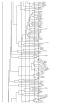 Tool to characterize protein structure phylogeny.
Initial Publication: Reference Here
- Latest Release: TBA
- More Information
- Web Interface
2D-RDC
 Given the increasing availability of RDC data sets collected in 2 alignment media, there is a need for
accurate
order tensor estimation techinques that leverage the correlation between the data collected in each
alignment.
approx2D is a web application and associated C++ engine that extracts both the principal order parameters
and the
relative orientation of the principal alignment frames of the two alignment media without the need for
assignment
or structure. The web application is a hosted
version of the approx2D utility with an easy to use interface and workflow. For automated runs or for
interfacing
directly with other C++ code, the C++ engine is also available as a standalone download.
Given the increasing availability of RDC data sets collected in 2 alignment media, there is a need for
accurate
order tensor estimation techinques that leverage the correlation between the data collected in each
alignment.
approx2D is a web application and associated C++ engine that extracts both the principal order parameters
and the
relative orientation of the principal alignment frames of the two alignment media without the need for
assignment
or structure. The web application is a hosted
version of the approx2D utility with an easy to use interface and workflow. For automated runs or for
interfacing
directly with other C++ code, the C++ engine is also available as a standalone download.
Initial Publication: Efficient and accurate estimation of relative order tensors from λ-maps
nD-RDC
 Advances in NMR instrumentation and pulse sequence design
have resulted in easier acquisition of Residual Dipolar Coupling (RDC) data. However, computational and
theoretical analysis of this type of data has continued to challenge the international community of
investigators because of their complexity and rich information content. Contemporary use of RDC data has
required a-priori assignment, which significantly increases the overall cost of structural analysis. This
article introduces a novel algorithm that utilizes unassigned RDC data acquired from multiple alignment
media (nD-RDC, n greater-or-equal, slanted 3) for simultaneous extraction of the relative order tensor
matrices and reconstruction of the interacting vectors in space.
Advances in NMR instrumentation and pulse sequence design
have resulted in easier acquisition of Residual Dipolar Coupling (RDC) data. However, computational and
theoretical analysis of this type of data has continued to challenge the international community of
investigators because of their complexity and rich information content. Contemporary use of RDC data has
required a-priori assignment, which significantly increases the overall cost of structural analysis. This
article introduces a novel algorithm that utilizes unassigned RDC data acquired from multiple alignment
media (nD-RDC, n greater-or-equal, slanted 3) for simultaneous extraction of the relative order tensor
matrices and reconstruction of the interacting vectors in space.
Estimation of the relative order tensors and reconstruction of the interacting vectors can be invaluable in a number of endeavors. An example application has been presented where the reconstructed vectors have been used to quantify the fitness of a template protein structure to the unknown protein structure. This work has other important direct applications such as verification of the novelty of an unknown protein and validation of the accuracy of an available protein structure model in drug design. More importantly, the presented work has the potential to bridge the gap between experimental and computational methods of structure determination.
Initial Publication:
Xijiang Miao, Rishi Mukhopadhyay, Homayoun Valafar, "Estimation of relative order tensors, and
reconstruction of vectors in space using unassigned RDC data and its application." Journal of Magnetic
Resonance, 194.2 (2008): 202-211
- Latest Release: TBA
- More Information
- Download (for software please contact the corresponding author)
SCOPE
SCOPE (Semi Classical Open Source Protein Energy) is an
open-source program that has been implemented in the Object Oriented C++ language, capable of computing
none-bonded energies for protein structures from first principles. SCOPE is also capable of manipulating
protein structures within the Rotamer space instead of the typical Cartesian space. This approach simplifies
calculation of the transitional force field through elimination of unnecessary terms such as bond lengths,
bond angles, and other peptide geometrical constraints. Elimination of unnecessary force calculation is
beneficial in improving computational performance while the OO approach results in better program
maintenance and customization for other projects. Finally, the calculation of forces has been compared and
confirmed with respect to other commonly used programs such as CHARMM and Xplor-NIH. Further development of
SCOPE can be very beneficial in refinement of computationally modeled structures, or potentially Ab-Initio
calculation of structures from first principles without any reliance on homology modeling.
Initial Publication: Reference Here
- Latest Release: TBA
- More Information
- Download